

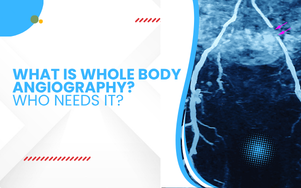
Whole body angiography is a single imaging test that maps the arteries across the heart, brain, kidneys, and limbs all in one sitting. Instead of checking just the coronary arteries, it looks at the entire vascular network, because atherosclerosis rarely stays in one place. It’s especially valuable in diabetics, where blockages tend to spread silently across multiple vessels. The aim is simple: find every significant narrowing before any of them causes a stroke, kidney failure, or a limb-threatening event.
According to Dr. S. A. Merchant, Advanced Heart Failure Specialist in Mumbai, “When I find a blockage in a diabetic’s heart artery, I’ve learned not to stop there, because the same disease is often quietly sitting in the carotids, the kidneys, and the legs, and whole body angiography lets us catch all of it in one go rather than waiting for the next emergency.”
Diabetic or have a known blockage and worried about the rest?
What Exactly Does Whole Body Angiography Show?
One test, the entire arterial map. That’s the point of it, and here’s what it actually picks up across the body.
- The coronary arteries. It maps narrowings in the heart’s own blood supply, the same blockages that cause angina and heart attacks, and shows whether they need a stent or can be managed medically.
- Carotids and brain vessels. Narrowing in the neck arteries is a leading cause of stroke, and catching it early means it can be treated with a stent before it ever throws a clot to the brain.
- The renal arteries. Blocked kidney arteries quietly drive up blood pressure and damage kidney function over years, often without a single symptom until the damage is well advanced.
- Legs and below the knee. Peripheral blockages, especially the below-knee disease so common in diabetics, threaten limbs and lead to non-healing ulcers, and they’re exactly the kind of thing a focused heart scan would miss entirely.
So it’s not just a heart test. It’s a full vascular survey, which is why it pairs naturally with multiorgan stenting when several blockages turn up at once.
Who Actually Needs Whole Body Angiography?
Not everyone needs this. But for the right patient, it changes the entire treatment plan, so knowing who fits matters.
- Diabetics, first and foremost. Diabetes drives diffuse, multivessel disease across the whole arterial tree, which is precisely why a diabetic with one known blockage so often has several others hiding elsewhere.
- Anyone with disease in one territory. Found a blockage in the heart? The odds of silent narrowing in the carotids or legs climb sharply, and that’s reason enough to look at the whole map rather than one corner of it.
- Patients facing major surgery. Knowing the full vascular picture before a big operation helps the team plan around stroke or kidney risk instead of being blindsided by it mid-procedure.
- Unexplained high blood pressure or kidney decline. Sometimes the cause is a renal artery blockage nobody thought to check, and a whole body study surfaces it when targeted tests have come back empty.
The thread running through all of these is systemic disease, the kind that doesn’t respect organ boundaries. Staying on the right path and identifying causes and symptoms is part of managing it once the full picture is clear.
Why Choose Dr. S. A. Merchant for Whole Body Angiography?
Dr. S. A. Merchant, DM(Cardiology), MD(MED), DNB(Cardiology), FSCAI(USA), has a large, well-documented experience in whole body angiography, particularly in diabetics, treating carotid, renal, lower-extremity, and below-knee blockages with stents and without surgery. He’s a founder member and senior consultant at Lilavati Hospital, and the Cleveland Clinic eHealth Research USA lists him among the world’s leading doctors across 143 countries. His approach is safe, simple, and effective, with very low recurrence, and most patients walk and are home within 24 hours.
What sets this apart is treating the patient as a whole vascular system, not a single artery. Blockages in the heart, brain, kidneys, and limbs get mapped and addressed in a planned, staged way rather than one crisis at a time.
Call +91-9820930389 to book your consultation.
Frequently Asked Questions
What is whole body angiography?
Whole body angiography is an imaging test that maps blood vessels across the heart, brain, kidneys, and limbs to detect blockages throughout the body in one session.
Who needs whole body angiography?
Diabetics, smokers, and patients with blockages in one artery who are at risk of disease in other vessels often benefit from whole body angiography.
Is whole body angiography safe?
Yes, it is generally safe, though it uses contrast dye and carries a small risk for patients with kidney problems or dye allergy.
How long does recovery take after whole body angiography?
Most patients walk within hours and go home within 24 hours, especially when the radial artery route is used.
REFERENCE:
- CT angiography of peripheral arterial disease. PubMed: https://pubmed.ncbi.nlm.nih.gov/16415129/
- Coronary atherosclerosis assessment by coronary CT angiography in asymptomatic diabetic population. PMC: https://pmc.ncbi.nlm.nih.gov/articles/PMC5820580/