

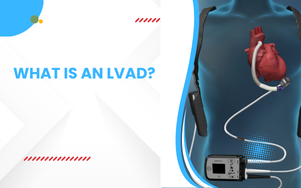
An LVAD, or left ventricular assist device, is a mechanical pump surgically implanted to help the heart’s main pumping chamber move blood to the rest of the body when it is no longer able to do so effectively on its own. It does not replace the heart and is not an artificial heart; rather, it works alongside the left ventricle, taking over most of the pumping workload so the body continues receiving oxygen-rich blood. Doctors typically introduce this option once medication and standard heart failure treatment are no longer sufficient on their own.
According to Dr. Shahid Merchant, heart failure specialist, “An LVAD is not the end of the road for a patient. It often provides valuable time, whether that means time to reach a transplant or time to regain a functional, active life.”
Standard treatment not keeping symptoms under control anymore?
When Does A Patient Need An LVAD?
Doctors consider an LVAD only after other treatment options have been tried and proven insufficient.
Advanced Heart Failure: Patients whose symptoms, including breathlessness, fatigue, and swelling, continue to worsen despite maximum medication doses are typically the first candidates considered for this device.
Bridge To Transplant: For patients awaiting a donor heart, an LVAD provides the necessary support to prevent the waiting period from becoming a medical emergency.
Destination Therapy: For patients who are not eligible for a transplant due to other health considerations, an LVAD sometimes becomes a long-term solution rather than a temporary measure.
Repeated Hospital Admissions: When heart failure symptoms result in recurring hospital visits every few months, this pattern often prompts a discussion about device support.
These decisions are made carefully, with doctors evaluating a patient’s overall health rather than heart function alone before making a recommendation. A closer look at heart failure treatment options typically precedes this step rather than replacing it.
How Does Life Change After LVAD Support?
Receiving an LVAD brings meaningful, practical changes to daily routine beyond the medical aspect.
Surgical Recovery: Implanting the device requires open heart surgery, and patients typically spend several weeks in the hospital afterward adjusting to how the pump functions.
External Power: The device operates on batteries worn outside the body, making charging routines and backup power a permanent part of daily life.
Regular Monitoring: Follow-up visits ensure the pump is functioning correctly and that the body is adjusting well, allowing complications to be identified early.
Improved Function: Most patients experience noticeable improvement in breathlessness, energy levels, and swelling within weeks, often enough to resume light activity or work.
It is an adjustment, but for many patients, it represents the difference between frequent hospital visits and reclaiming aspects of a normal life. Home monitoring plays an important role in making that transition smoother.
Why Choose Dr. Shahid Merchant?
Dr. Shahid Merchant is a senior interventional cardiologist with over 35 years of clinical experience, holding qualifications in DM Cardiology, MD Medicine, DNB Cardiology, and FSCAI (USA). He trained in France and at Harvard’s Massachusetts General Hospital, and has performed more than 10,000 cath lab procedures as founding consultant at Lilavati Hospital.
For a patient being told they may need mechanical support, this means the decision is made with a specialist experienced in managing the full range of advanced heart failure cases, not only the straightforward ones. This experience shapes how closely a patient is monitored before, during, and after the procedure.
Call +91 9820930389 to book your consultation.
Frequently Asked Questions
Is an LVAD the same as a heart transplant?
No, an LVAD supports the existing heart, while a transplant replaces it entirely.
Can someone live a normal life with an LVAD?
Many patients return to work and light activity, though daily routines do change permanently.
How long can a patient live with an LVAD?
Some patients live for years with the device, depending on overall health and condition.
Is LVAD surgery reversible?
In select bridge to recovery cases it can be removed, but it’s usually long term.
REFERENCE:
- NIH/NHLBI – Ventricular Assist Devices
- NCBI – Left Ventricular Assist Device Support in Heart Failure
Disclaimer
This blog is for general informational purposes only and isn’t a substitute for professional medical advice, diagnosis, or treatment.